Why Is This So Expensive?
“Why is this so expensive?” is less a question and more a coded complaint. But if you really want to know, I’m an open book—and what’s inside isn’t pretty.
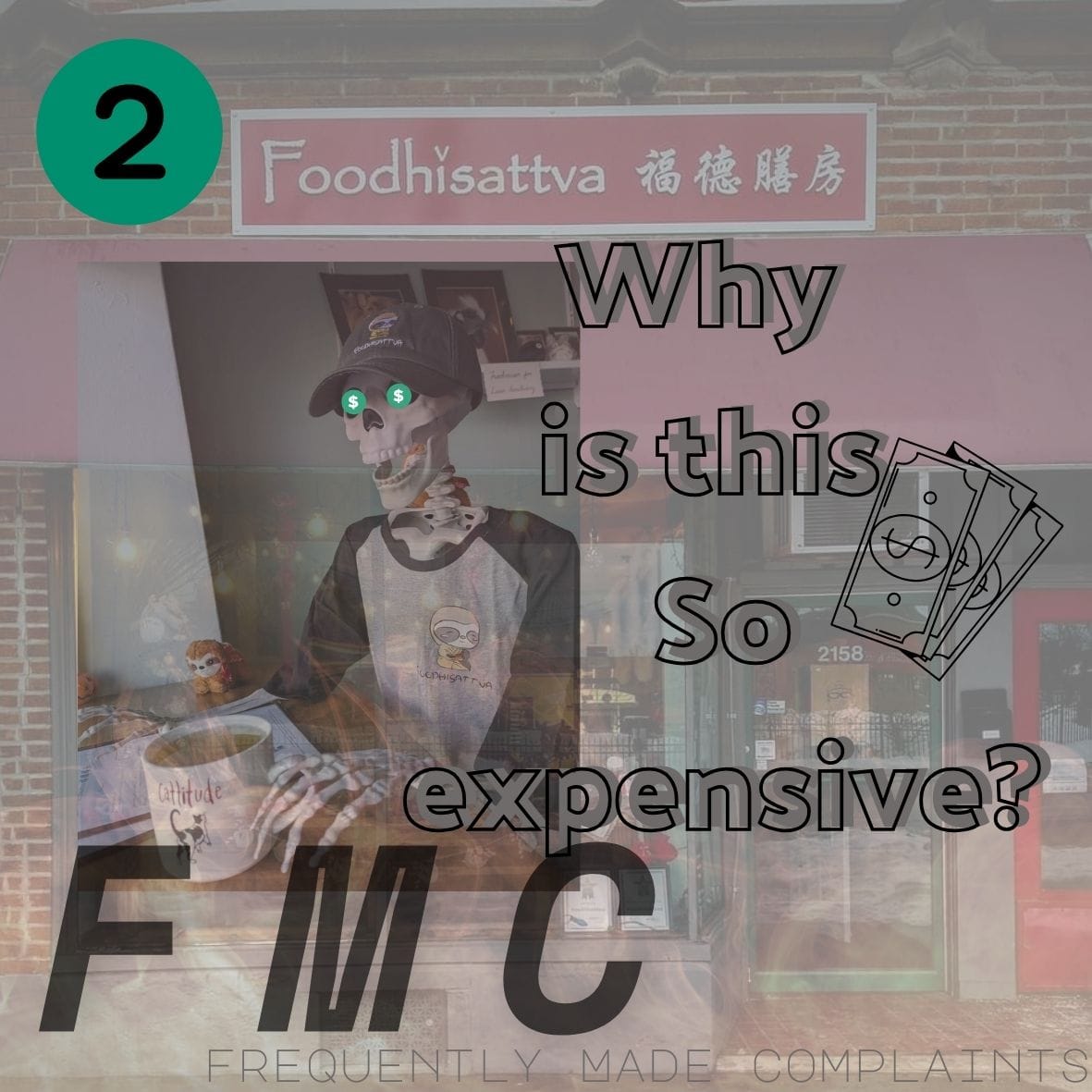
Let’s talk about pricing. It sucks, and everything is more expensive now than it’s ever been. This question is odd because it gives the impression that those asking have been living under a rock for the last six years. They haven't, obviously — I’m not fielding questions underground, like some freed philosopher who rediscovers the wisdom of the sun every time I spend a buck. But this question is more often than not a coded complaint, a frequently made complaint (FMC).
I’m an open book — to a fault, some might say — but for those who actually want to know what it costs to run a small restaurant, I’m a deep well of information. I opened less than a year before COVID, and I’ve felt like I’m sinking deeper ever since. Some of our costs are due to Trumpflation, others to unbridled corporate greed. Some, I’ll admit, are completely our fault.
Thanks to a tyrannical tariff war, small businesses are struggling like they did during the recent COVID pandemic, perhaps even more so when you consider that many of us haven’t dug ourselves out of that hole. A horrendously mismanaged pandemic, and now an idiotic trade war wrought with corruption — I wonder what these awful events have in common. But I digress. Many of the nation’s largest businesses, which both donated to and paid directly into Trump’s campaign, received tariff exemptions, allowing them to dodge the full impact of the current economic chaos. Meanwhile, other big players, with deep pockets and sprawling warehouses, were able to stockpile essential supplies ahead of the market manipulation and tariffs currently choking small businesses worldwide. Supply and demand now feeds these giants, the corporations that own their means of manufacturing and distribution, while the rest of us scrape by, our costs climbing with every passing week.
As an Asian-fusion restaurant, we utilize a lot of products from Asia — some aren’t manufactured in the US because we lack the machinery or specialized skill sets, others because domestic demand is too low to justify production. As a result, prices on everything from compostable containers to spices, seasonings, and other essentials we rely on have jumped 30%, 40%, even 100% in just a few months. And this is on top of years of wage stagnation and inflation that had already pushed prices to record highs.
And when prices jump, they rarely fall back. Corporations cling to inflated profits long after their justifications evaporate. Meanwhile, landlords and insurance companies use inflation as an excuse to raise rates, regardless of whether they’re actually facing higher costs themselves. We certainly know this firsthand — our rent has gone up 10% every year, and when our lease expired, our landlord tried to tack on another 30% (we managed to talk him down to 20% this year). Meanwhile, our insurance, despite never having made a claim, just shot up another 25%. Why? They say inflation. We know it's greed.
It’s also worth mentioning that the tariffs extend beyond just China and other Asian nations. Canada and Mexico, two of our largest trading partners, were also hit with these added costs. So even ingredients we can get from our neighbors have become significantly more expensive, compounding the strain on small, independent businesses like ours. Where does most of the produce in Ohio come from? You guessed it — long-term democratic allies and new enemies of the current regime, Canada and Mexico.
In response, many restaurants quietly raise prices, switch to cheaper ingredients, or cut labor-intensive dishes in favor of mass-market convenience items. Here’s where we’re partly to blame for our own struggles. As COVID laid waste to small restaurants, we did everything we could to keep up with rising costs while maintaining our standards. We covered most of the labor ourselves, withholding our own wages to continue making our menu from scratch with high-quality ingredients and thoughtful business practices. For instance, we’ve always used compostable and biodegradable supplies, despite the much higher cost. We’ve also refused to pay our staff rock-bottom, “tipped” or minimum wages, instead doing our best to pay fairly, even though it means working absurd hours for no pay whatsoever on our end.
Sure, our costs are higher as a result. We don’t have the buying power of the chains and restaurant groups. Our focus has always been on the food, not flashy decor or mass-produced trends. You might not be wowed by our atmosphere, but the dishes? That’s our pride and joy.
But there comes a point, after six years of hoping prices will decrease, where you realize you've lost more than you'll ever know. Despite that, we’re still doing everything we can to make creative vegan scratch cuisine as affordable as possible, but as prices on everything from ingredients to utilities, staffing, and rent keep climbing, we’re being priced out.
So, with a heavy heart and a deep, weary sigh, we curse the greed, gluttony, corruption, and cruelty of the corporate takeover of just about everything. It hurts to raise prices, because we know firsthand how hard it is in this world. They’re pricing us out of existence, and knowing that, we hate to make it harder for anyone else to meet their needs. But we’re struggling to keep up, and as we enter our sixth year in this space, we realize we can't afford to make it much longer. This is a last-ditch attempt to stay standing. And so, though it pains us, we have no choice but to raise our prices. We're late to the price hike. Hell, on paper, we were late to it years back, but we have to at least try to climb our way out of the deep, seemingly never-ending red wave of despair that engulfs us.
I understand the anger, worry, and fear that comes with cost increases these days. The next menu will see some modest increases, and that sucks. I'm sorry, for all of us.